AI vs Traditional VFX: Which Should Indie Films Choose?
Six-figure VFX quotes, $2,000 AI features and one very confused earring: how indie filmmakers should split the work in 2026.
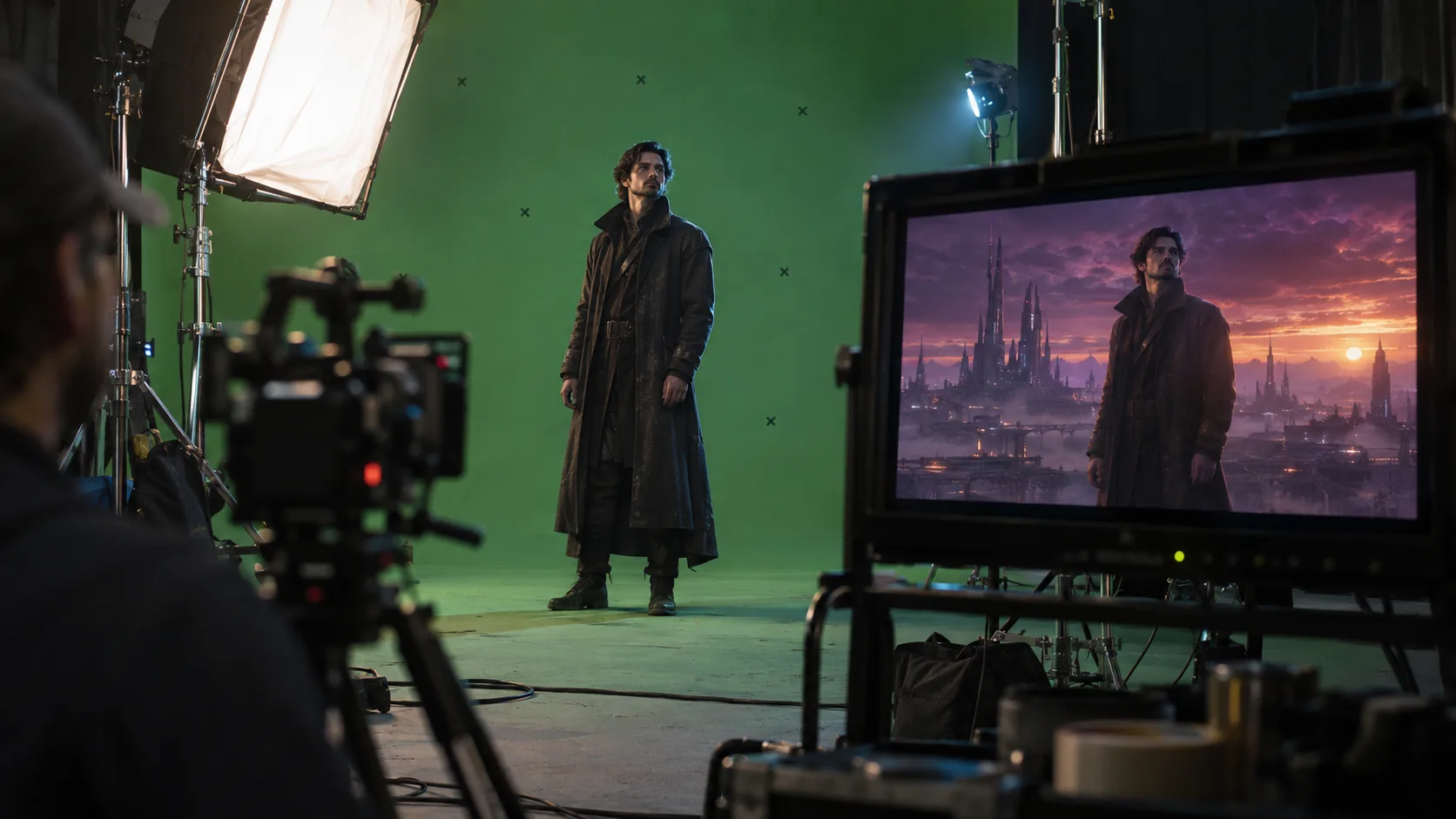
Six-figure VFX quotes, $2,000 AI features and one very confused earring: how indie filmmakers should split the work in 2026.
The short answer: use both, just never for the same job
For most indie films in 2026, the smartest VFX budget is hybrid: shoot the performances for real, let AI build or extend the worlds around them, and pay traditional compositors for the shots an audience will stare at. AI is faster and cheaper for environments, weather, crowds and previs. Traditional VFX still wins on precise control, repeatable notes and anything that has to hold up on a festival screen.
The mistake is treating it like a cage fight. It is closer to a kitchen. AI is the microwave, traditional VFX is the stove, and nobody serious cooks a wedding dinner with only one of them.
2026 turned the debate into actual movies
This was the year the experiments got feature-length. In November, World of Reel reported that French director Bruno Dumont had finished The End, a disaster thriller he shelved for 25 years because the earthquakes and falling asteroids were too expensive to shoot. He made it with generative AI from his home in Paris between August and November, and is aiming for a 2027 festival premiere.
In Korea, Raphael, billed as the country's first feature made entirely with generative AI, opens in cinemas on 25 November after 14 months of production. The Korea Times review praised the polished visuals and found the story predictable, a verdict we suspect will be copied and pasted onto a lot of AI films.
At Tribeca in June, Dreams of Violets became the first fully AI-generated live-action feature selected by a major festival, reportedly made for about $2,000 (The Guardian). One critic spotted an earring that appears and vanishes between shots in its trailer. Then there was Hell Grind, a 95-minute AI action film from Higgsfield that reportedly cost about $500,000, most of it compute, and was widely reported as a Cannes premiere. The festival said it was not part of the official programme. Apparently the hallucinations were not limited to the frames.
The gatekeepers moved too. Cannes barred films driven by generative AI from its main competition in April, and in May the Academy ruled that acting awards need roles "demonstrably performed by humans with their consent". AI is welcome on set. It is not yet welcome at the podium.
Where traditional VFX still earns its invoice
Traditional VFX means artists building each shot by hand: tracking, rotoscoping, CG, lighting and compositing. It is slow and it is not cheap. One 2026 pricing guide puts established facilities at roughly $10,000 to $30,000 per finished minute for independent productions.
What that money buys is control. When the director says "move the moon two inches left and make it sadder", a compositor can do exactly that, ten times in a row, without the moon changing shape. Generative models are getting better at notes, but "same shot, one tiny change" is still where they wobble.
- Emotional close-ups, where faces, hands and eyelines must stay perfectly stable
- Products, logos and real landmarks that have to be exact and legally clean
- Shots that will be revised many times by a director, producer or client
- Scenes you may submit to festivals or awards with human-performance rules
Where AI quietly saves an indie budget
AI shines when a shot needs scale more than precision: skylines, weather, crowds, set extensions, establishing shots, previs and pitch reels. A 20-second wide of a city on fire no longer needs a CG department. It needs a clear brief, a good eye and someone who checks every frame for a sixth finger.
The tools are also becoming less mysterious. Autodesk Flow Studio, formerly Wonder Studio, turns live-action footage into editable CG scenes, automating motion capture, camera tracking and character animation. On the money side, Morgan Stanley analysts have estimated that generative AI could cut film and TV production costs by as much as 30%.
The catch is that AI is cheap per clip and expensive per keeper. Ten generations to get one usable shot, then compositing, grading and continuity fixes to make it sit next to the shot before it. Budget per finished shot, never per prompt.
Shot by shot: who should do what
Instead of picking a side for the whole film, decide shot by shot. This is the split we see working most often on indie budgets.
| Shot type | Best fit | Why |
|---|---|---|
| Wide establishing shots, skylines, weather | AI | Scale matters more than pixel-level control |
| Set extensions behind real actors | Hybrid | Keep the performance, build the world |
| Crowds and background extras | AI or hybrid | Cheap to generate, but check every face |
| Emotional close-ups and dialogue | Shoot it for real | Audiences, and award rules, care about human performance |
| Products, logos, real landmarks | Traditional or hybrid | Must be exact and legally clean |
| Creatures and heavy destruction | Hybrid | AI for look development, compositors for the finish |
| Previs, pitch reels, test scenes | AI | Fast iteration before real money is committed |
The hybrid route, or why green screen is having a second life
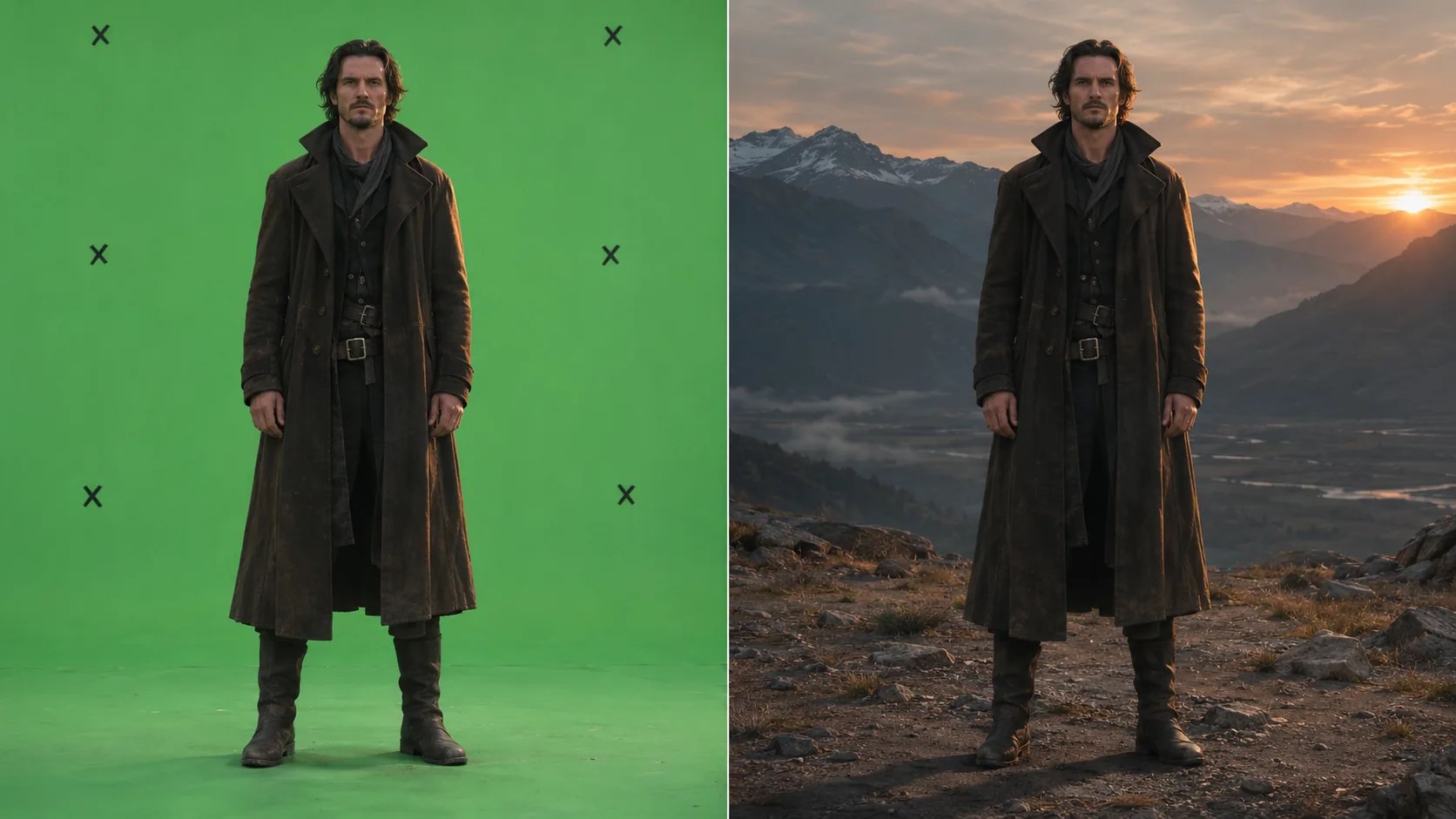
Green screen used to be where indie budgets went to die: expensive CG worlds, months of compositing and a final shot that still looked like a weather forecast. Now it is the cheapest way to get the best of both. The actor gives a real performance with real eyelines, AI builds the world behind them, and a compositor makes the two belong together.
The craft is in the boring parts. Light the green evenly. Put tracking markers where the camera can see them. Plan the space in 3D before generating a single background, so the virtual floor knows where the actor's boots will land. That is the workflow Sinfluent Media builds its AI-hybrid VFX around, finished as native 1080p masters rather than a 720p render stretched into "4K" with a straight face.
The test is simple. If the audience cannot tell where the shoot ended and the world began, it worked. If the boots float an inch above the floor, nobody will care how cheap it was.
Before you lock the VFX budget
- Label every VFX shot in the script as AI, traditional or hybrid before you ask for quotes
- Shoot clean plates: even green, matched exposure, tracking markers and lens notes
- Budget revisions per finished shot, not per generated clip
- Keep human performances for scenes headed to festivals or awards, and read each festival's AI disclosure rules
- Get likeness and voice consent in writing, from everyone
- Ask for one finished test shot before committing the whole film
The cheapest VFX shot is still the one you planned. If you are weighing a hybrid approach for a film or series, the studio production process shows how story, direction, compositing and delivery fit together.
Quick Questions, Straight Answers
Is AI VFX good enough for an indie feature?
For wides, environments and background work, often yes, if a human checks every frame. For close-ups and dialogue, most films still shoot real performances and composite.
How much cheaper is AI VFX than traditional VFX?
It depends on the shot. Generation is cheap per clip, but revisions, continuity fixes and compositing add up. Compare cost per finished shot, not per prompt.
Can using AI VFX hurt festival or awards chances?
Using AI tools is generally allowed, but Cannes bars films driven by generative AI from its main competition and the Academy requires human performances for acting awards. Check each festival's rules.
Sources
- World of Reel: Bruno Dumont made his next film entirely with AI (Nov 6, 2026)
- The Korea Times: Review of Raphael (Nov 16, 2026)
- The Guardian: Dreams of Violets (Jun 3, 2026)
- Sify: What the first fully AI film to enter a major festival says (Jun 2, 2026)
- The A.V. Club: Hell Grind and the Cannes claim (May 2026)
- NPR: Academy announces major overhaul to rules (May 2, 2026)
- CP24: At Cannes, filmmakers shift towards cautious acceptance of AI (May 15, 2026)
- Vitrina: VFX Cost Guide 2026
- Autodesk: Flow Studio overview